Talk to the Veterans Crisis Line now


An official website of the United States government


The Office of Research and Development (ORD), through the Suicide Prevention Research Impact NeTwork (SPRINT), intends to continue its established VA / STARRS-LS Researcher-in-Residence Program. This opportunity is contingent upon funding support each fiscal year.
The VA / STARRS Researcher-in-Residence Program seeks to support VA investigators interested in using Study to Assess Risk and Resilience in Service – Longitudinal Study (STARRS-LS) data to study suicide risk in Veterans and service members transitioning to civilian life. Residents will work as part of ongoing STARRS teams and have opportunities to develop data analytic skills necessary for research that involves large data sets and will have opportunities to establish a suicide prevention research portfolio that will be useful for other funding opportunities. Residents will serve as co-authors with STARRS investigators and other VA collaborators on scientific publications resulting from the residency. It is intended that research products from the residency will inform suicide prevention endeavors in VA.
Full proposals are due from applicants on June 30th, 2025, by 8:00PM ET, and the residency would commence October 1st, 2025. Please download the full RFA for further details.
During their 2-year residencies, Drs. Houtsma and Edwards will be STARRS-LS team members who will pursue independent research projects. Additionally, Drs. Houtsma and Edwards may assist in responding to queries from the Office of Mental Health and Suicide prevention and other shareholders and will help establish processes for linking STARRS-LS and VA data
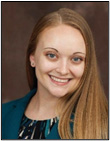 Emily Edwards, PhD is a licensed clinical psychologist in New York State and Director of the VISN 2 MIRECC Clinical Core. As a scientist-practitioner, Dr. Edwards embraces integration of clinical practice and research. Her work focuses on themes of suicide, justice involvement, military-to-civilian transition, and mental health of military Veterans and on transdiagnostic interventions for Veterans affected by these difficulties. She has authored over 40 publications, received over $3M in grant funding to date, and provided consultation services to local problem-solving courts, the Veteran Benefits Association, and NYC Department of Corrections, among others.
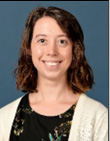 Dr. Claire Houtsma is a Clinician Investigator and Suicide Prevention Coordinator at the Southeast Louisiana Veterans Health Care System and the South Central Mental Illness Research, Education and Clinical Center (MIRECC). She also holds academic appointments in the schools of medicine at Louisiana State University Health Sciences Center and Tulane University. Dr. Houtsma is currently completing a VA Clinical Science Research & Development Career Development Award-1, which aims to evaluate the feasibility and acceptability of peer-delivered lethal means counseling among firearm owning Veterans. In particular, Dr. Houtsma is passionate about using community-engaged research approaches to develop interventions that can reach firearm owning Veterans before a suicidal crisis emerges.